
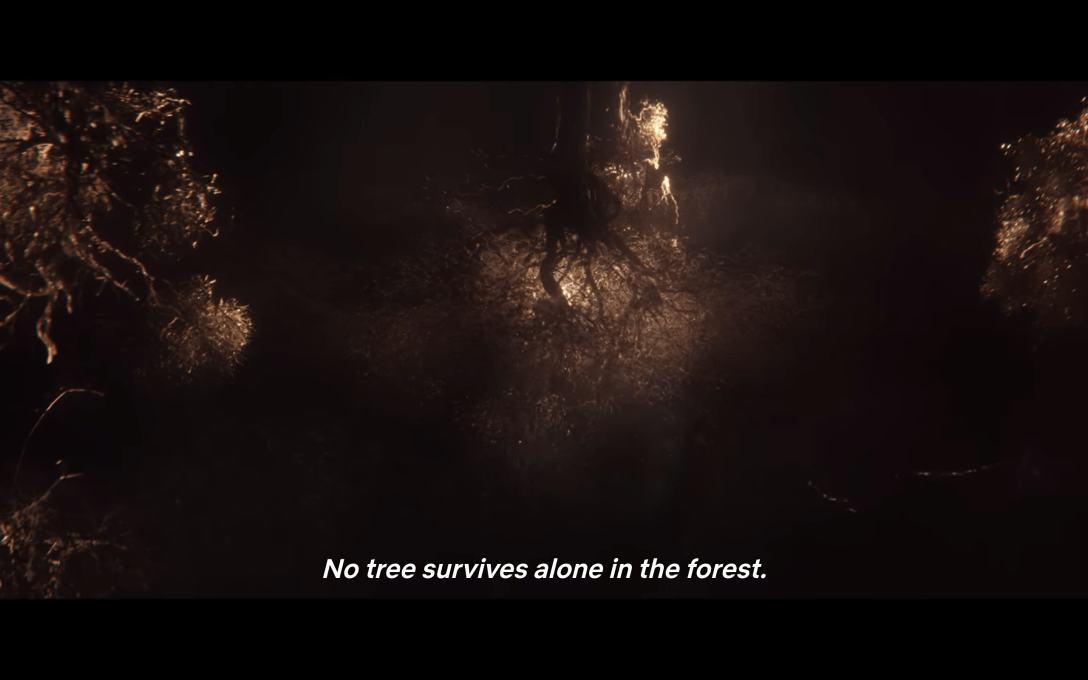
Note: to read the following you do not have to have watched the OA in order to, well, follow it. It does contain minor spoilers, but they are pieces of a much bigger puzzle. Although the show was canceled, I highly recommend you still watch the two seasons that did make it to Netflix. But since it was indeed canceled, I must infer many people did not watch the show. So you don’t have to pass by if you are one of them!
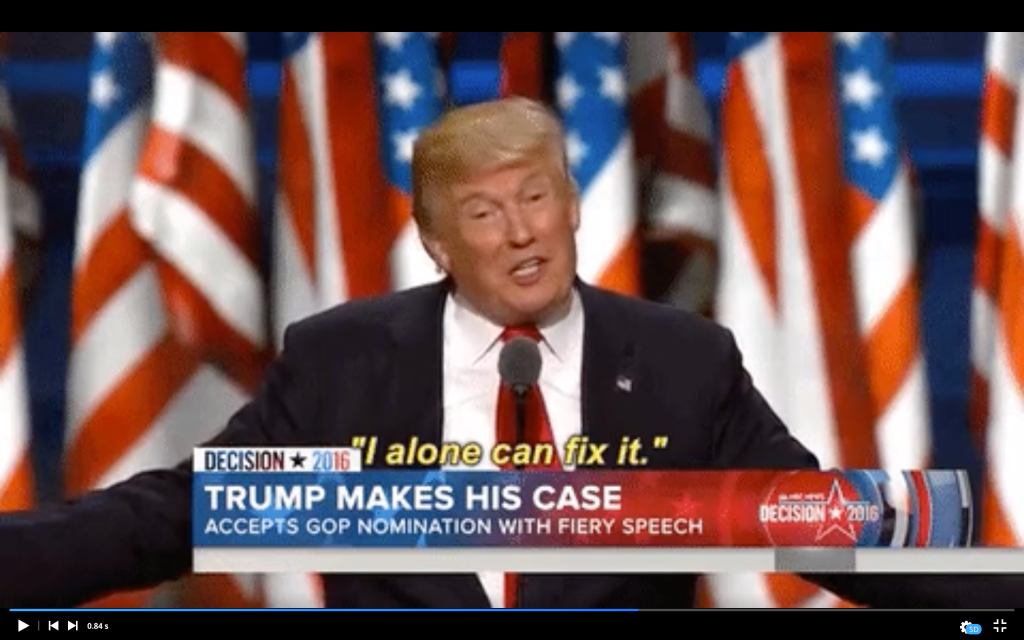
However you’ve engaged with the upcoming presidential election and the seemingly endless conversations surrounding it, you probably have encountered our contemporary culture’s instinct to look for single, simple solutions to massive problems. Even when we talk about the potential power of America’s democratic elections, we tend to emphasize the personal identity and intentions of the candidate over the force of a majority of individuals uniting together to support a variety of causes. This attitude was summarized and embodied by Donald Trump during his speech at the 2016 Republican National Convention, where he accepted the party’s nomination for president.
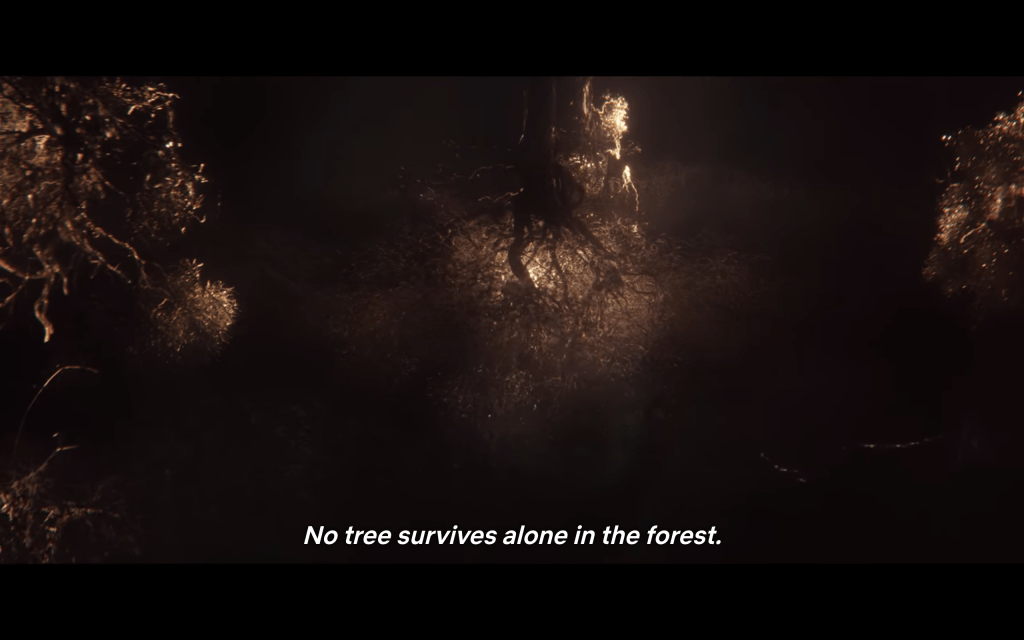
An idea from the other end of the spectrum is offered by the spiritual sci-fi mystery drama The OA. The power of collective unity is a theme throughout the show, but a scene in season 2 verbalizes it most succinctly. Here, the character of Prarie, also known as The OA (played by Brit Marling), is spoken to by trees (yes, trees – you’re going to have to suspend your disbelief to enjoy much of the show’s story) who warn her that she is going to be under attack and will need a group of others (“a tribe”) to survive. The OA counters, “I can do it alone,” echoing the sentiment above. But the trees point out the need for others.
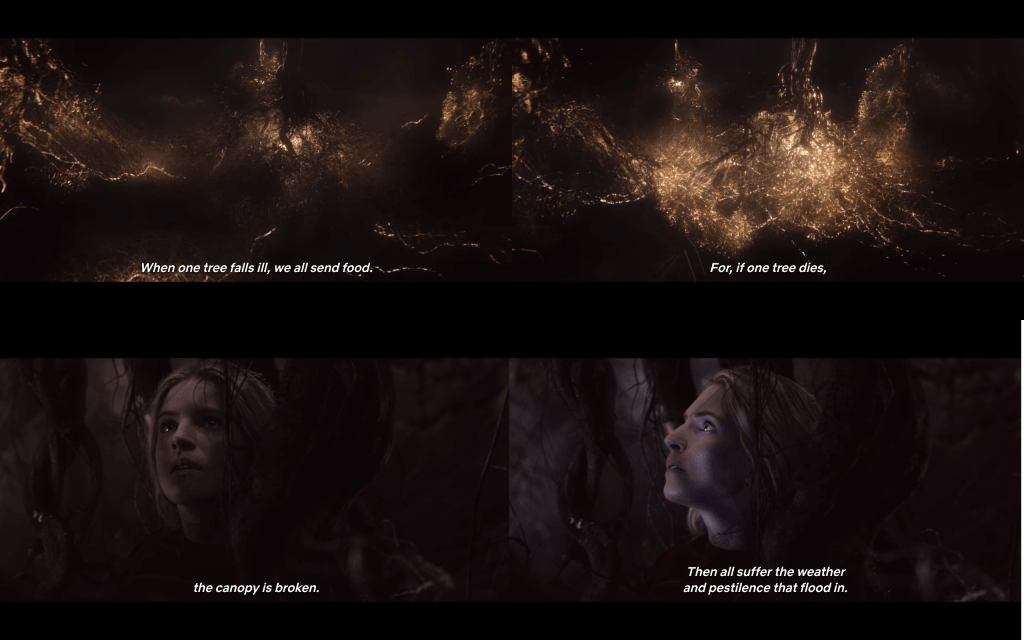
The OA is hesitant to involve others in her fight for personal survival. This is a very common response many of us have to asking for help with our own problems. This difficulty of asking for assistance and the necessity of consequently receiving it are key components in the struggle around elections we face now. The political is personal. Countless individuals face the risk of direct harm enacted on them as a result of current policies ordered by those in power. Some cannot afford housing, some have no access to the medical care their lives depend on, some face blockades against deciding what their family unit looks like. Not to mention, the potential for harm’s expansion in strength and reach depends very much on how we choose to fight for changing the occupants of political office and other positions of power. This concept drives the currently popular Bernie Sanders campaign refrain, articulated by the candidate in a speech at an October 2020 rally.
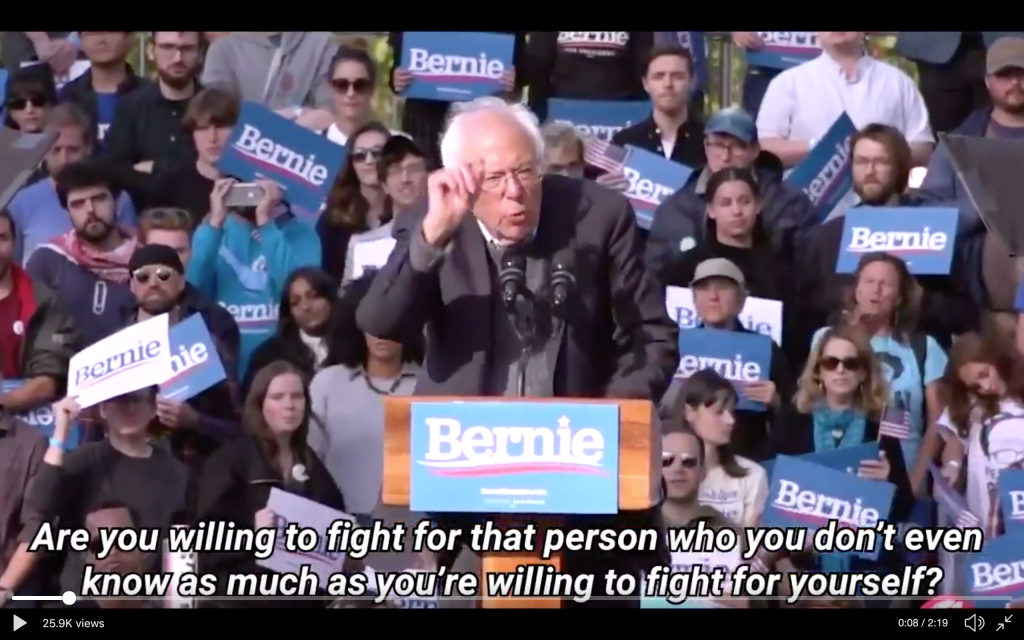
It is easy (and made easier with that aforementioned “focus on one thing” instinct of modern US culture) to equate fight with vote. But voting en masse only accomplishes one goal (getting your candidate in office), and often enables the individual voter to detach from the associated causes shortly after. A strong, effective political movement is rarely built from a single goal or action. The most impactful, helpful movements involve many continuous actions by many individuals who continuously contribute. As my friend Christy pointed out to me in recent conversation, electoral politics cannot alone fix it either.
This is an essential component to fully understanding our population’s capacity to make progress, a change, or even just a difference. It is also present in the very beginning of The OA‘s story. Its events are incited by The OA/Prairie asking five people to listen to her (perspective) experience, then take action by engaging in five separate physical movements. Her demand for five others is unwavering, certain that there must be group participation for any chance at accomplishing the goal. In the first episode, she explains that if the five other characters accept to do what she asks, “There will come a point when you’ll see why you’re here, what you might do together, how you could help people that you’ll never meet.”
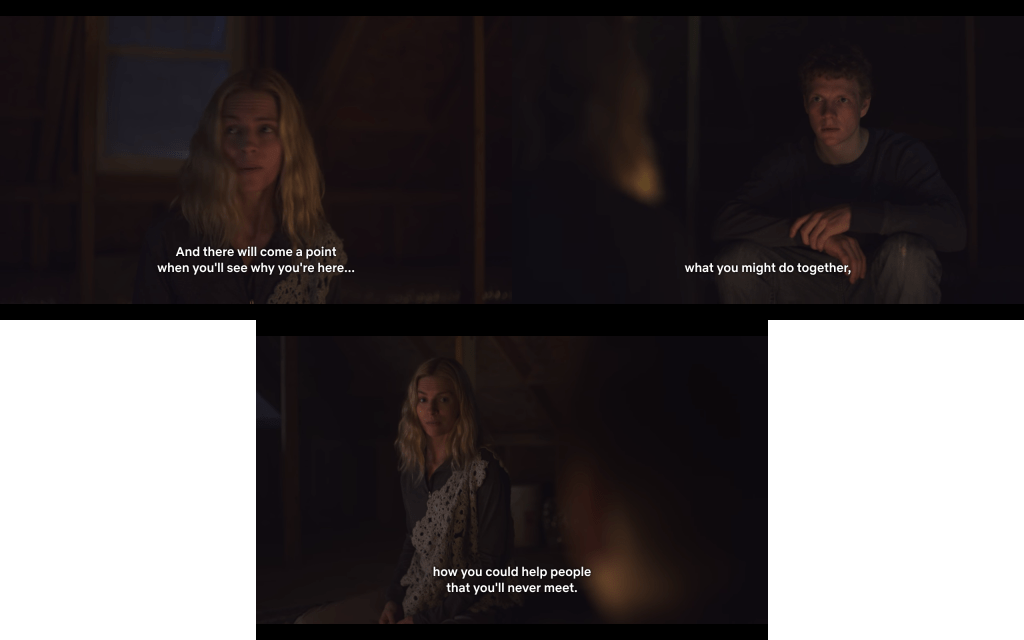
Sounds familiar, right? Who knows? The Bernie Sanders campaign staff might include a speech writer who has seen this show.
Back to the story, the process she proposes here is long, tedious; it spans over the first season. The characters who agree to pursue these movements have to make compromises in their own lives, shift the status quo even at times it does not benefit them to do so. The most important and most challenging of all is the requirement they conjure belief in The OA, in each other, and in themselves. I won’t tell you whether or not they participate and reach success, because that would just be too many spoilers! But it also isn’t the most important conclusion to gain here because, regardless of what happens, the most important part is that they do try.
In the process of working together to help others, the individuals find themselves helping each other more directly, making connections they never expected. Each reaches some kind of liberation, a discovery of personal power.
None of us can survive alone. “No tree survives alone in the forest.” But we can survive together. Furthermore, we can make changes together. If we allow ourselves to see things in this light, we can truly make a movement. Voting is imperative, but it’s only one of the first steps. We can strive towards embracing other ways to help others – from the ones who stand in the voting line alongside us to the ones who can’t be there because of forces beyond their control. Then we can go further in our movements, together.
 the and times
Yes! Also I love how the collective force in the OA comes from so many different people. They make a point of picking people from different groups, struggling with different issues, and who may have different perspectives. And I think that’s also what is so important about us coming together in this moment now, as a country, as a collective. Not me, us! #bernie2020
LikeLike